A working creative’s guide to LLMs
Five modules on directing language models without losing yourself. For creatives who already have a voice and don't want the tools to flatten it.
The question isn't whether to use AI.
Most AI training is about what the tools can do. This workshop is about what you bring to the table that they cannot. We go deep on voice, judgment, and the uncomfortable places where AI pressure-tests your creative identity. You leave with a framework for working alongside these tools without becoming indistinguishable from them.
Before tactics, there's posture. How you relate to these tools — with curiosity, skepticism, or anxiety — shapes everything downstream. We start here.
What these tools are, what they're not, and why the gap between the two matters. The mental models most people never get.
From bare commands to rich direction — the full range of how you can speak to these tools and what each level actually produces.
Where AI fits into real work: the workflows, the handoffs, the moments to lean in and the moments to step back.
Leave with a working set of principles that are yours — not borrowed rules, not best practices from someone else's practice. Yours.
This workshop focuses exclusively on large language models — not image generators, video tools, or other AI categories.
Most AI workshops focus on tools. This workshop focuses on the person using them.
You'll learn how to work with AI without losing your voice, judgment, or creative agency. Rather than teaching a fixed set of prompts or workflows, we'll help you develop a practical framework for thinking with AI. One that can evolve as the tools evolve.
Through discussion, hands-on exercises, and real-world examples, you'll learn how to use AI intentionally, critically, and creatively, in ways that reflect your own goals, values, and professional practice.
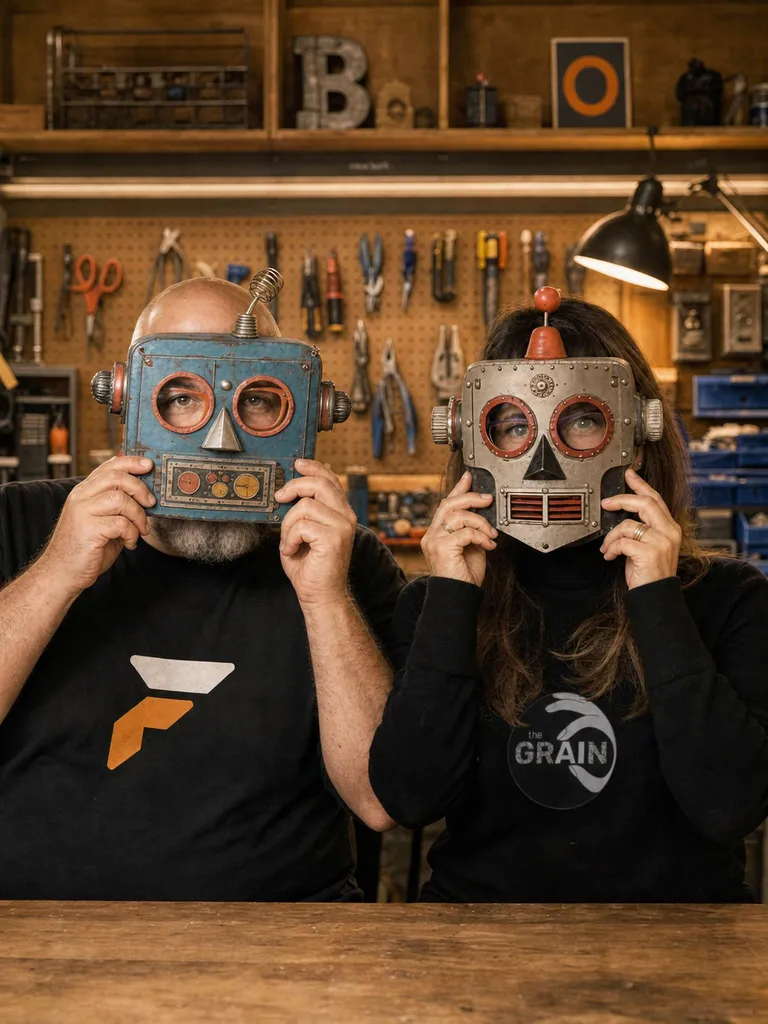
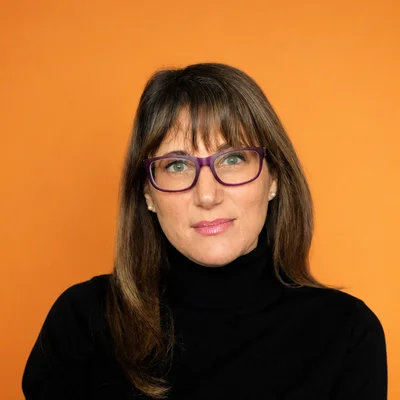
Ronit Novak is the founder and editorial director of THE GRAIN, a platform exploring the pleasure and peril of AI and the future of creative work. Through writing, events, workshops, and public dialogue, she helps people navigate technological change while staying connected to what makes their work uniquely human.
Grounded in editorial leadership, visual storytelling, and the psychology of creativity, her work focuses on creative agency, authorship, and judgment in an increasingly automated world. She also helps photographers and visual storytellers develop a stronger voice, clearer point of view, and more intentional creative practice.
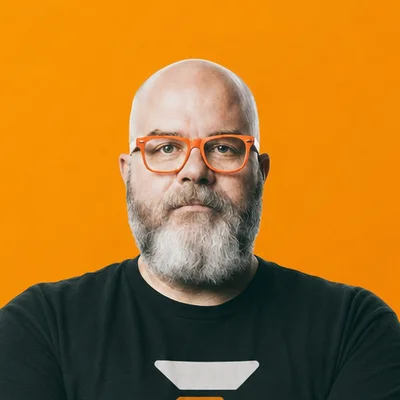
Dré Labre is the founder and creative director of Future Creative, a practice that teaches working creatives how to direct AI without handing over their voice. Through workshops, writing, and hands-on creative direction, he helps people fold these tools into real work, the kind with deadlines and clients attached, while keeping the judgment that made the work theirs to begin with.
He spent more than 20 years as a creative director, making award-winning work across advertising and creative technology, at agencies like Rethink, DDB, and McCann, and at his own studio, Never. He came up building for web, activations, and robotics, arriving with the ideas and the means to build them. That mix of creative and technical shapes how he teaches: human-first, grounded in the belief that taste, judgment, and intention are what separate work worth making from output.
"Your work examples were inspiring & the prompting tips gave me a lot to work with. Can't wait to put it into practice."
"[Your workshop] was super informative and I will definitely be dropping in on your future workshops!! Thank you for sharing your knowledge with us"
"Thanks for sharing your insights at [your workshop]. It was really practical and useful."
A working creative’s guide to AI
Limited-time early bird pricing.
Questions? Get in touch.
A working creative’s guide to AI
Non-refundable. Transferable.
Questions? Get in touch.
Need help convincing your manager?